Autonomous does not mean isolated: housing cooperatives
— Laurent Bigard
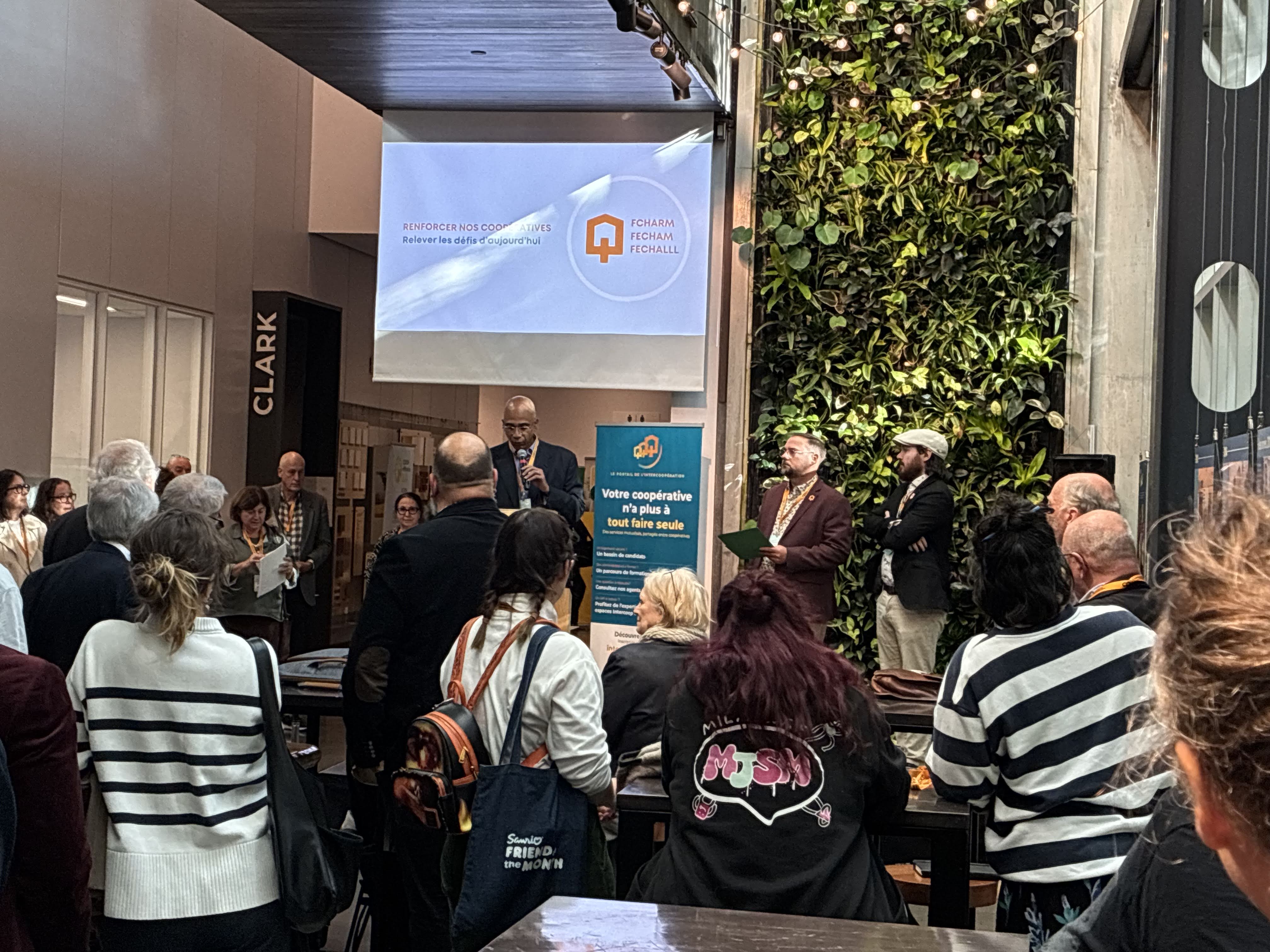
Your housing cooperative has its own board of directors, members, buildings and its own history. It is rightfully proud of its autonomy. But autonomous does not mean alone in the face of challenges. Every day, dozens of cooperatives in Montérégie face exactly the same problems, each on their own, often with limited means.
This reality raises an essential question. An administrator's first reflex is generally: "How can our cooperative solve this problem?" Yet another question deserves to be asked: "Do we really have to solve it alone?" This is the entire spirit of FECHAM, the Federation of Housing Cooperatives of Montérégie.
This article draws inspiration from a reference document tracing twenty years of cooperative initiatives in Quebec. It demonstrates, with supporting examples, why autonomous does not mean isolated — and how your cooperative can benefit from this today.
Autonomous does not mean alone: the true meaning of cooperative independence
Autonomy is a fundamental value of the cooperative movement. Each cooperative remains in charge of its decisions: its general assembly and its board of directors retain full control over their direction. No one dictates what you must do.
But the experience of the last two decades proves that autonomous does not mean having to build everything alone. Remaining independent in one's choices while sharing resources is not a contradiction: it is precisely the definition of inter-cooperation. Preserving one's identity and pooling one's means can go hand in hand.
Too many cooperatives confuse independence with isolation. They pay high fees for one-off expertise, reinvent tools that already exist elsewhere, or let administrators become discouraged for lack of support. Isolation is costly — in money, time and succession.
The four challenges your cooperative does not have to face alone
The reference document clearly identifies the major recurring challenges. These are the same ones that come up, year after year, in Montérégie cooperatives:
- Legal expertise and accounting: interpretation of the Cooperatives Act, financial statements, legal obligations.
- Building work and maintenance: planning renovations, calls for tenders, construction site monitoring.
- Training of administrators and succession: preparing new members to serve on the board and take over.
- IT tools: management software, rent tracking, document archiving.
Each of these challenges is a heavy burden for a small cooperative to shoulder alone. To choose the right structure from the outset, consult our guide on housing cooperative in Montérégie: making the right choice. Pooled among several cooperatives, these same challenges become significantly more manageable.
Twenty years of cooperation: a lesson for our housing cooperatives
The story told in the reference document is inspiring. It shows how a simple local agreement became a leading collective infrastructure, step by step, without any grand five-year plan at the outset.
From the 2005 spark to a true structure
It all begins in 2005, when two organizations simply decide to share a general management. No complex legal apparatus: an immediate need and a shared salaried resource. The spark was lit.
Between 2008 and 2010, the ripple effect sets in. Sharing agreements multiply, new alliances are formed, and by 2011, four groupings are already sharing about ten human resources. The lesson is clear: it is precisely when resources are lacking that cooperation becomes profitable.
Patient growth up to today
Here are the major stages of this evolution, which perfectly illustrate why autonomous does not mean giving up one's independence:
- 2011: four organizations create a consortium with a single general management, while preserving complete decision-making autonomy.
- 2011-2014: shift towards specialized expertise, with the hiring of a first legal advisor dedicated to members.
- 2014-2023: development of six expertise hubs (law, human resources, technology, communications, accounting and group purchasing).
- 2023: nearly 200 member organizations share the skills of nearly 70 professionals.
In less than twenty years, a management-sharing arrangement between two organizations has become a network of hundreds of members. Each organization has nevertheless remained 100% in charge of its decisions.
Our analysis: what mutualization changes for you in Montérégie
At FECHAM, we believe that this story can be replicated at the scale of our region. The housing cooperatives of Montérégie do not have to repeat, each on their own, steps that others have already perfected.
The strength of the model can be summed up in one sentence: we had little to lose, much to gain. Cooperatives that pool their resources access cutting-edge expertise that they could never afford on their own. A shared legal advisor costs a fraction of the price of a private firm billed by the hour.
This is exactly what we offer: governance support, assistance with compliance with the Cooperatives Act, mediation in case of conflict, services for seniors, and support in real estate projects. The training of administrators, in particular, is a profitable investment. Our article how a training pathway can help your cooperative details these concrete benefits.
Mutualization also protects against costly mistakes. A well-supported cooperative avoids poorly framed decisions that sometimes lead to disputes between members, a topic covered in our guide avoiding disciplinary sanctions.
Concrete steps to break out of isolation
Your cooperative can begin this process without upheaval. Here are some concrete and accessible options:
- Join FECHAM to immediately access a support network and shared resources.
- Enroll your administrators in training in governance rather than improvising at the board.
- Pool certain services: accounting, IT tools or group purchasing for work.
- Request compliance support in order to comply with Quebec's Cooperatives Act without stress.
- Consider mutualization or merger if your cooperative struggles to ensure its succession.
New administrators will also find essential benchmarks in our comprehensive guide to cooperative governance. Every small step towards cooperation strengthens the entire movement.
Frequently Asked Questions
Does pooling services mean losing my cooperative's autonomy?
No. As twenty years of cooperative history demonstrates, autonomous does not mean isolated. Your general assembly and your board of directors remain entirely in charge of their decisions. You share resources, not your decision-making power.
Is my cooperative too small to benefit from mutualization?
On the contrary. Experience proves that it is precisely when resources are lacking that cooperation becomes most profitable. Small cooperatives are often the ones that gain the most from sharing expertise and tools.
What services does FECHAM concretely offer?
FECHAM offers training in governance, management support, legal compliance assistance, mediation, services for seniors, as well as support in mutualization, mergers and real estate projects, all tailored to Montérégie.
How do you start a cooperation process?
The simplest way is to contact FECHAM to assess your needs. We help you target the most urgent challenges and identify the shared resources most useful to your situation.
Ultimately, the great lesson of these twenty years is clear: autonomous does not mean alone. Your cooperative deserves to retain its identity while benefiting from the strength of the collective. In Montérégie, FECHAM is here to transform your individual challenges into shared solutions. Contact us to discover how our network can concretely support your cooperative starting today.